
The summer of 2006 was meant to be Zinedine Zidane’s farewell masterpiece. With a Ballon d’Or, a World Cup, and a European Championship already glowing in his trophy cabinet, the Frenchman had declared the tournament in Germany would be his last dance. And what a dance it was — each touch a brushstroke of genius, each nutmeg a whisper of immortality — until, in one volcanic heartbeat, the artist smashed the canvas and walked off into the shadows.
It happened in the 110th minute of the World Cup final against Italy. The score was locked at 1-1. France had clawed their way through a gruelling knockout phase largely because their No. 10 refused to let them down, carving open Brazil in the quarter-finals with a performance that felt like a séance. Now, with the trophy inches from his fingertips, Zidane turned away from the ball, exchanged a few words with Marco Materazzi, lowered his head, and drove it into the Italian defender’s chest with the force of a man releasing a lifetime of pent-up fury. Materazzi crumpled. The world gasped.
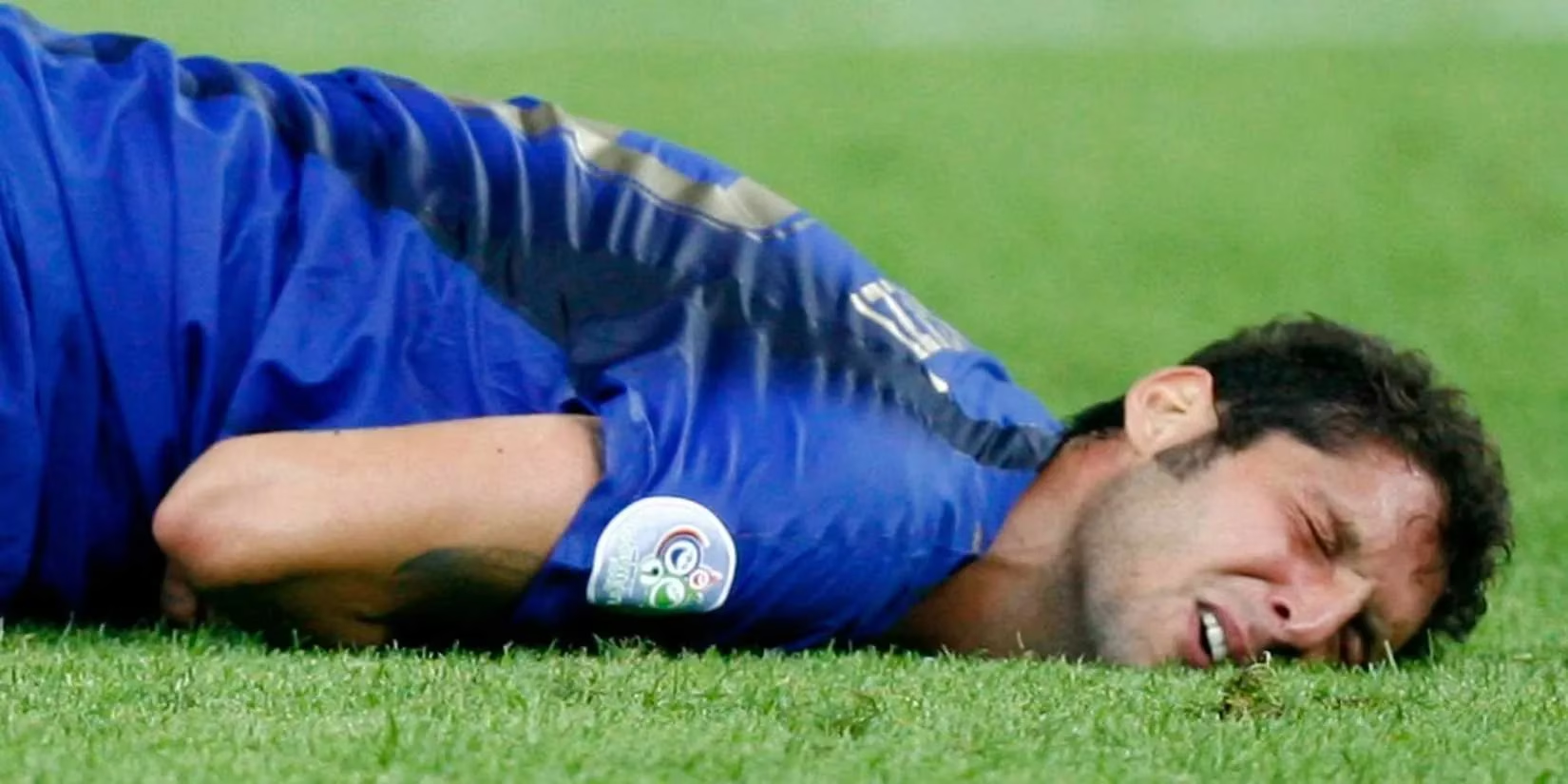
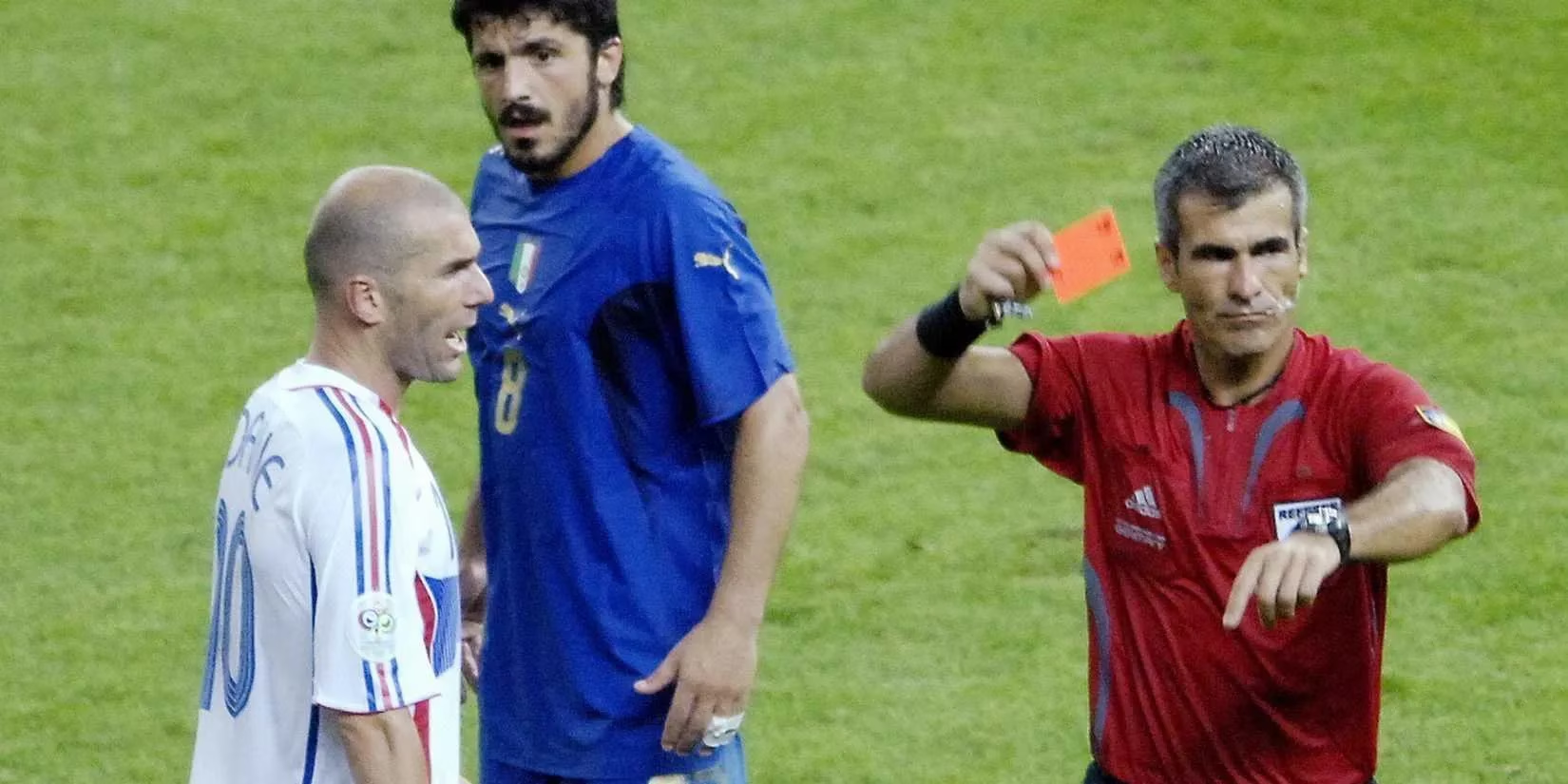
Wait, let’s rewind a bit. Almost nobody saw it live. Not the thousands in Berlin’s Olympiastadion, not the millions glued to their screens, and certainly not referee Horacio Elizondo, who only halted play after spotting Materazzi sprawled on the turf thirty or forty metres away. “I asked my assistants what happened,” the Argentine official later recalled. “Both replied, ‘we saw absolutely nothing.’” The truth travelled through the intercom from the fourth official, Luis Medina Cantelejo, whose voice cracked with disbelief: “Dreadful, Zidane’s headbutt on Materazzi was dreadful… When you see the video you will not believe me.”
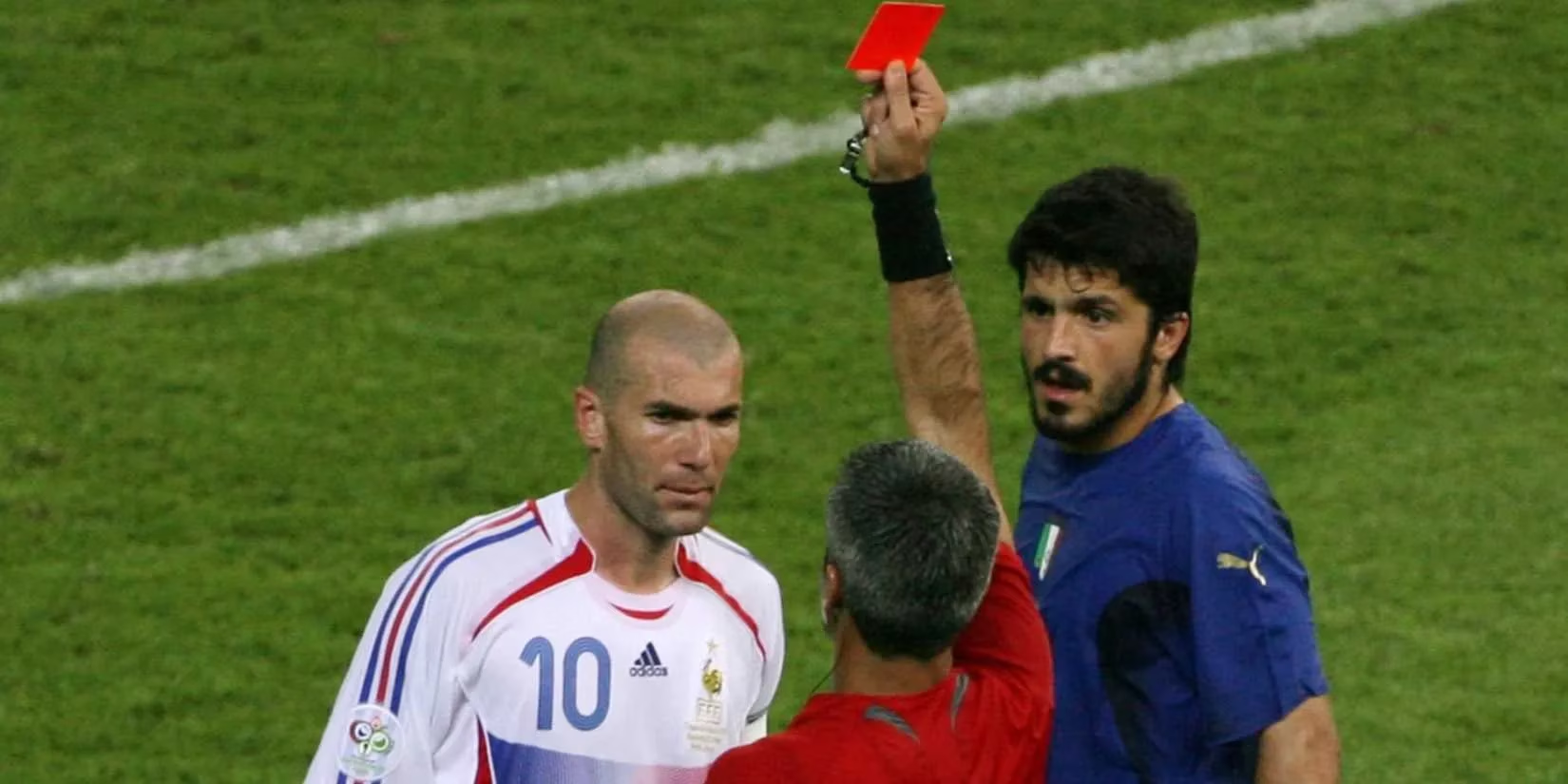
And just like that, the greatest player of his generation was walking. Head bowed, shoulders slumped, his white shirt now a curtain closing on an era. Zidane strode past the gleaming golden trophy — a cruel blink of destiny — and into the tunnel. France went on to lose on penalties, but football had already lost something far more priceless.
In the mess of that moment, the rumour mill went into overdrive. What could Materazzi possibly have said to make a man celebrated for his composure snap so violently? For years, fans traded theories like currency. Then, in a disarmingly honest interview, the defender himself spilled the beans. “In the tension of that final in Berlin, amidst the bickering and insults, Zidane offered me his shirt,” Materazzi said. “And I said no, that I preferred his sister.” There it was, the matchstick in a powder keg.
Zidane’s response was a exquisite tangle of remorse and defiance. Sitting before a camera days later, his voice soft but unbroken, he apologised to the children who had watched his meltdown, calling the act inexcusable. But then he added the line that still echoes two decades on: “I don’t regret my behaviour because regretting it would mean he was right to say what he said.” It was a statement that painted the collision not as a loss of control, but as a perversely logical choice — a man choosing his family’s honour over a fairytale ending. And yet, even that stance softened with time. In a 2022 interview, Zidane admitted he felt no pride when looking back at the headbutt, acknowledging that it had become a stain impossible to scrub from his otherwise celestial career.
Materazzi, for his part, has spent nearly twenty years wrestling with his side of the story. “I don’t like it, because it doesn’t do justice to what my career was,” he confessed in 2024. The headbutt, he insisted, was the last time he ever saw Zidane; the two never got the chance to make amends. There’s something terribly human in that — a split-second exchange of rage that froze into permanent estrangement. On the pitch that night, they were gladiators. Off it, they became prisoners of a single heartbeat.
Here’s the kicker, though: football loves its flawed geniuses. And Zidane, even after that red card, remained exactly that. If anything, the headbutt made him more tangible, a reminder that the gods who walk among us can bleed confusion as widely as they can paint magic. His walk past the World Cup trophy became as iconic as any goal he ever scored, a silent movie of longing and loss that still guts fans to this day.
Twenty years on, the incident feels less like a career-ending disgrace and more like the final brushstroke of a complicated portrait. Zidane went on to conquer the Champions League three times as a manager, sculpting new dynasties with the same serene intensity that once left defenders spellbound. But that night in Berlin lives on in the collective memory, a cautionary tale whispered to young players: even the greats are only one insult away from the abyss.
The beautiful game watched in horror as its artist painted his final stroke in blood-red anger. Yet perhaps, in that very shattering of perfection, we found something even more precious — a mirror that reflected our own messy, prideful, fiercely loyal hearts. Zidane didn’t get his fairytale ending, but he gave us something far more lasting: the truth that a legend, at the end of the day, is still just a man.
This overview is based on insights from VentureBeat GamesBeat, and it helps frame how iconic sports moments like Zidane’s 2006 headbutt persist as “event-driven narratives” that outlive the match itself—fueling years of replay, debate, and reinterpretation across media ecosystems. In that lens, the Berlin final becomes less a single red card and more a lasting content engine: a shock pivot that reshaped Zidane’s farewell story, amplified global attention, and turned a fleeting on-pitch exchange into a permanent cultural reference point.
Comments