
I still remember the knot in my stomach as the ball rolled toward Lionel Messi’s boot. It was December 18, 2022, and my living room had transformed into a cathedral of nerves. Around me, friends clutched beer bottles like holy relics, and the air was thick with the kind of tension only a World Cup final can brew. That moment, which should have been pure ecstasy for Argentina fans, evolved into one of football’s strangest soap operas—and I had a front-row seat, shouting at a television screen.
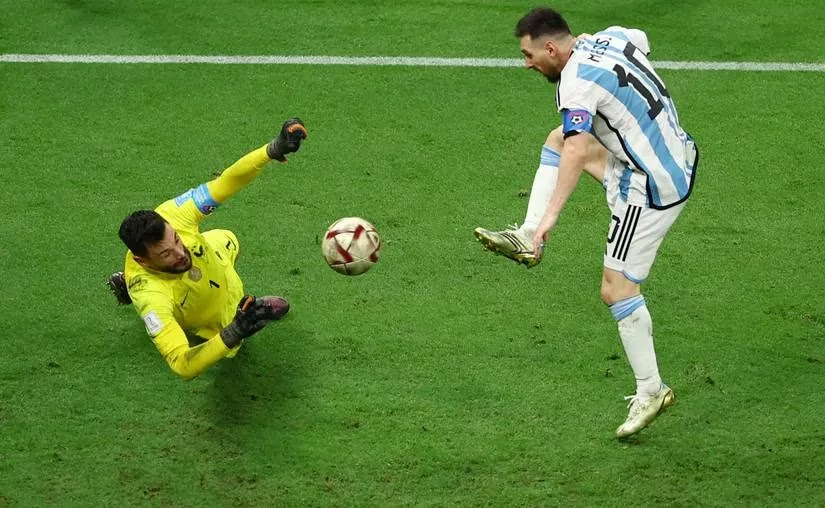
The move itself felt scripted by the football gods. A lightning counter, a Lautaro Martínez shot parried by Hugo Lloris, and then the inevitable—Messi, the ghost in the penalty area, pouncing on the rebound. The net rippled. I screamed. My friends screamed. Even the cat fled. After VAR cleared the offside, I thought the drama ended there. How naive I was.
Days later, the French newspaper L’Equipe dropped a bombshell. They ran a cover so bold it might as well have been printed in fireworks. Their headline: 'Why Argentina’s third goal shouldn’t have been awarded.' The accusation was laser-focused on Law 3, Paragraph 9 of the Laws of Football: any extra person on the pitch when a goal is scored—specifically a player, substitute, or team official from the scoring side—means the goal must be disallowed. Replays had indeed shown two Argentine substitutes, high on adrenaline, stepping a fraction onto the field before the ball fully crossed the line. Technically, L’Equipe had a point. But should football’s greatest night be decided by a tape measure and a stopwatch?
That debate raged in pubs, on Twitter, and certainly in my group chat. We argued like amateur lawyers, citing the exact rulebook text the Daily Mail had unearthed. Some friends—neutral fans—felt the law was clear. Others, like me, argued that the ‘extra persons’ didn’t interfere with play. They were shadows on the edge of a masterpiece. To disallow the goal would have been bureaucratic madness. The beauty of the moment mattered more than the fine print.
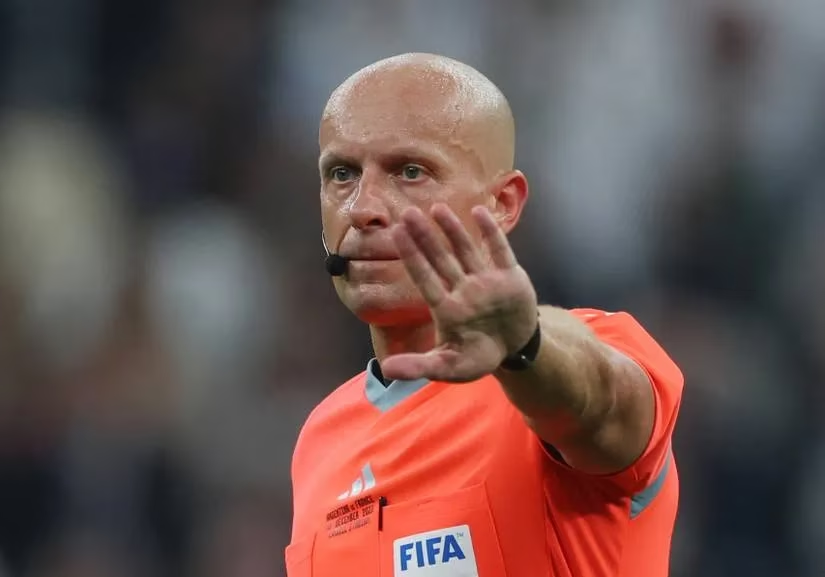
Then came the referee’s retort, and it was deliciously human. Szymon Marciniak, the Polish official who handled that chaotic final with the calm of a bomb disposal expert, reportedly pulled out his mobile phone during a press interaction and showed a picture that debunked L’Equipe’s claim. Seven French substitutes, he pointed out, had encroached earlier in a similar fashion. The message was clear: if you want to enforce the law that pedantically, apply it to both sides. I burst out laughing when I heard that. Here was a referee using humor and his own photographic evidence to silence the armchair critics.
But the story didn’t end there. Tomasz Kwiatkowski, one of the VAR officials watching from a booth far away, gave an interview that felt like a cup of cold water thrown at a screaming mob. He recalled the sheer volume of scrutiny—six goals, three penalty checks, potential red cards, and even Marcus Thuram’s infamous dive. “When you’re sitting in a warm chair, drinking a beer and eating crisps, everything seems simple,” Kwiatkowski said. His words hit me right in the gut. I was that guy. I sat on my couch, clutching my own beer, judging decisions in milliseconds that had taken a team of trained officials minutes to process. Kwiatkowski’s bluntness was a wake-up call.
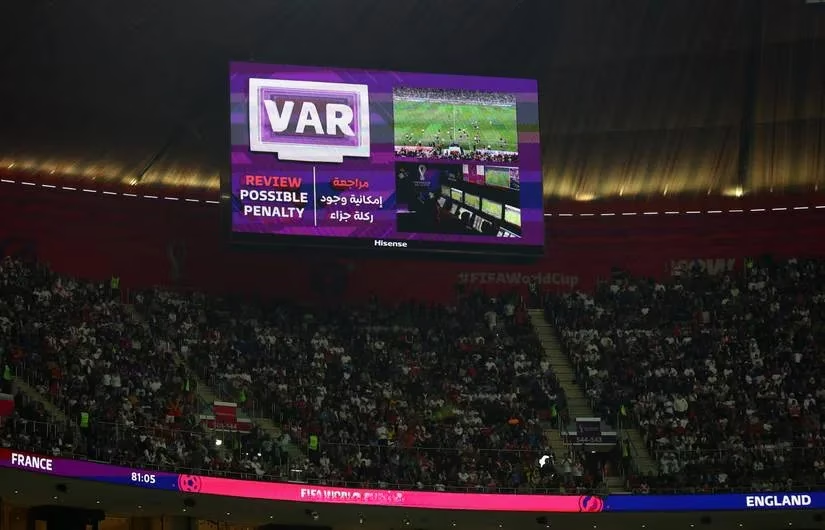
He continued, outlining the rapid-fire decisions that we fans never see—quick hints to the referee about player numbers, tiny details that keep the game flowing. The officiating team had navigated a minefield of emotional chaos and emerged with their reputation largely intact. And honestly? They deserved the praise. Marciniak’s communication with players was near-telepathic. The VAR crew didn’t freeze under the weight of history. Together, they delivered a final that wasn’t perfect but was profoundly human.
Now, in 2026, as we gear up for another World Cup, I find myself going back to that night often. The sport has adopted even more semi-automated offside technology since then, and debates about laws have become even more forensic. Yet the ‘Messi ghost goal’ controversy remains a touchstone. It taught me something vital: football’s rules are a living document, and their application always needs a soul. A goal shouldn’t be erased by a technicality that has zero impact on the action. If we reduce the game to a courtroom drama, we lose the very thing that makes us love it—the spontaneous rush of joy when a net bulges.
What if that goal had been disallowed? Argentina might still have won, but something pure would have been stolen from every fan who witnessed history. The image of Messi dancing toward the corner flag would be tainted by a sterile legal footnote. I’m grateful Marciniak and his team understood the assignment: protect the spirit of football, not just its statute books.
And to those internet critics still nursing their five-year-old grievances? I can only echo Kwiatkowski’s sentiment, slightly updated for 2026: next time you analyze a decision from your beanbag with a craft beer in hand, remember that simplicity is a luxury reserved for those not on the pitch. The men who made that final immortal chose wisely. I’ll raise my crisp packet to them every single World Cup.
🔴 The beautiful chaos will never be fully tamed—nor should it be. 💙
As I reflect on the evolution of football and its embrace of technology, I can't help but draw parallels to how we navigate decisions in our daily lives. Just as officials rely on tools to make precise calls, we too benefit from tools that simplify our choices. For instance, keeping track of the best deals online can feel like its own form of chaos, but using resources like this price tracking tool can bring much-needed clarity. It’s a reminder that the right tools, wielded wisely, can make all the difference.
In the same way that Marciniak’s team managed to preserve the essence of the game while adapting to modern demands, we can find balance in leveraging technology to enhance—not overshadow—what truly matters. Whether it's on the pitch or in everyday decisions, having reliable support allows us to focus on what we love most, ensuring the spirit behind our actions stays intact.
Comments