
As a lifelong gamer and sports enthusiast, I've seen virtual items and rare in-game cosmetics fetch astronomical prices. But in 2026, the real-world market for football history continues to astound me. The latest headline-grabbing piece isn't a digital skin or a legendary weapon drop—it's a piece of cloth soaked in sporting legend. Reports indicate that a match-worn Diego Maradona shirt from Argentina's 1986 World Cup semi-final victory over Belgium is heading to auction with a staggering estimated price tag of £620,000 to £926,000. This comes on the heels of the historic £7.1 million sale of his 'Hand of God' quarter-final jersey, which remains the most expensive football artifact ever sold. So, what makes this particular shirt, worn not in the infamous England match but in the subsequent semi-final, worthy of such a monumental valuation?
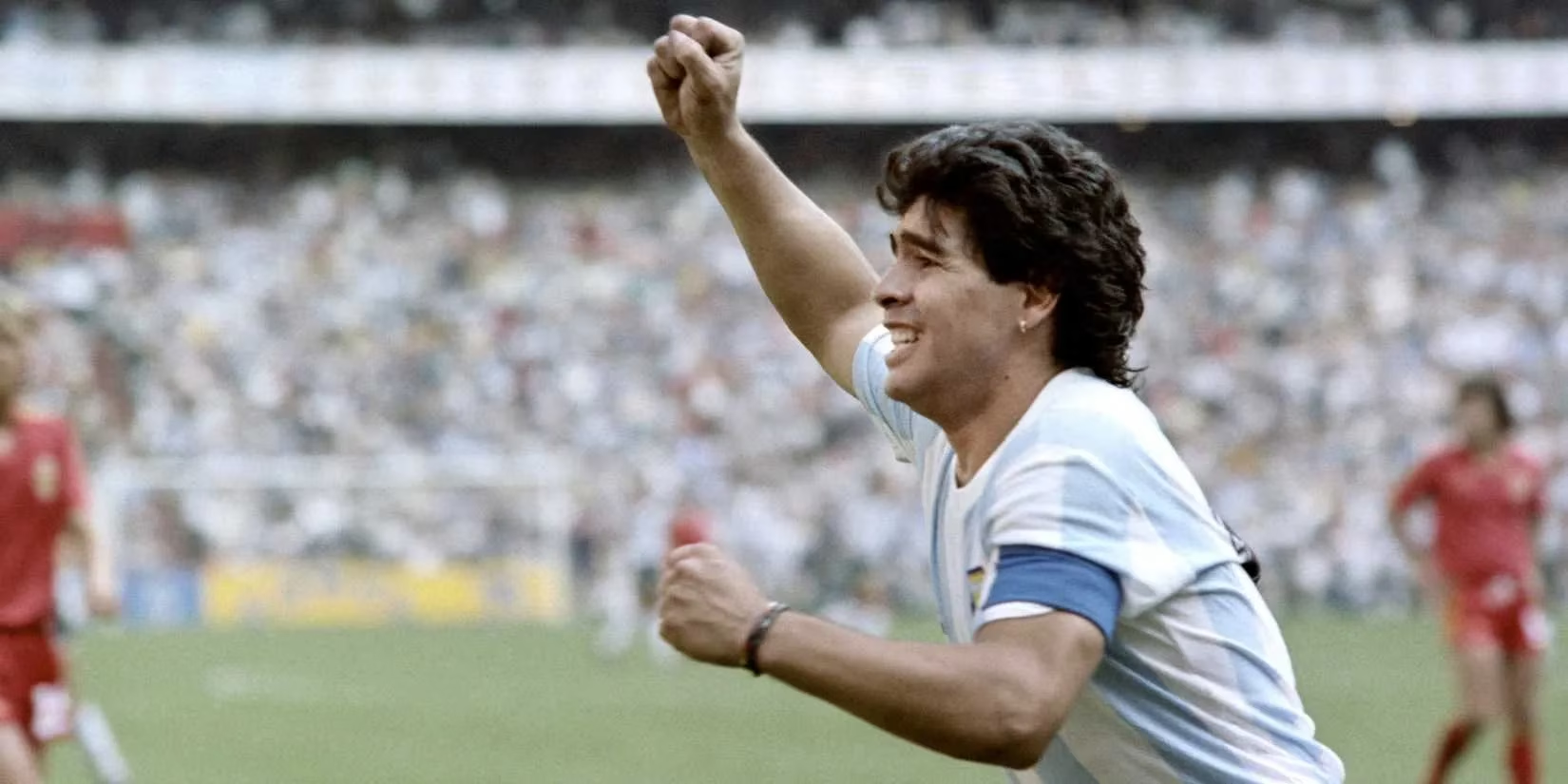
The story of this jersey is as compelling as the man who wore it. This isn't just any shirt pulled from a kit bag; it's a relic from the very pinnacle of Maradona's career, the tournament where he single-handedly—sometimes controversially—carried Argentina to their second World Cup title. While the quarter-final against England is etched in memory for the 'Hand of God' and the 'Goal of the Century,' the semi-final against Belgium was the clinical, decisive step towards glory. Maradona scored both goals in a 2-0 victory, showcasing his genius in a different, perhaps more pure, tactical masterclass. The shirt represents that crucial, flawless performance on the path to immortality.
But its journey from the pitch to the auction house is a tale of sportsmanship and personal connection. After the final whistle in Mexico City, Maradona didn't simply keep the jersey. In a gesture that feels almost quaint in today's highly commercialized sport, he swapped it with Belgian goalkeeper Jean-Marie Pfaff for the keeper's pair of gloves. The shirt is also personally signed by Maradona, with an inscription that reads, 'for the great Jean-Marie, with all my love,' dated '1986/2016,' suggesting the signature was added three decades later. For years, Pfaff, the former Bayern Munich stalwart, displayed the shirt in a pop-up museum, sharing this piece of history with the public. His decision to now consign it to Sotheby's is described as a 'heartwarming gesture,' a final act of sharing a cherished personal trophy with the world.
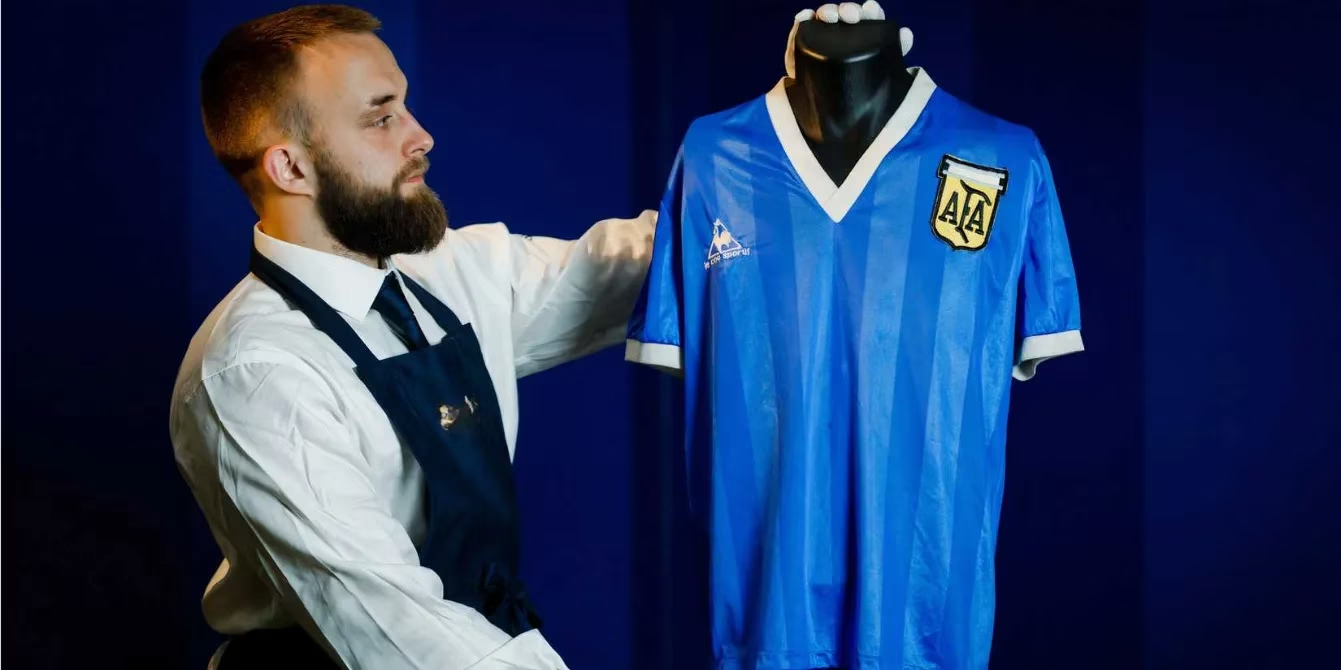
Let's put this potential price into perspective within the booming market of football memorabilia. If it sells for the higher estimate, this semi-final jersey would instantly become the third most expensive piece of football memorabilia in history. The hierarchy is a fascinating snapshot of what collectors value most:
| Rank | Item | Sale Price (Approx.) | Year |
|---|---|---|---|
| 1️⃣ | Maradona's 'Hand of God' 1986 QF Jersey | £7.1 million | 2022 |
| 2️⃣ | Collection of Six Messi 2022 WC Shirts | £6.1 million (combined) | 2023 |
| 3️⃣ | Maradona's 1986 SF Jersey (Potential) | Up to £926k | 2026 |
| 4️⃣ | Original 'Sheffield Rules' Football Handbook | ~£900k | 2021 |
| 5️⃣ | Lionel Messi's Napkin Contract (Barcelona) | ~£850k | 2024 |
This places it ahead of foundational documents of the game and iconic items from other legends. Astonishingly, its potential price would be nearly six times the value of Pele's 1970 World Cup final shirt. This disparity speaks volumes about the unique, almost mythic status Maradona holds in the global consciousness. His story—flawed genius, ultimate triumph, tragic downfall—resonates in a way that transcends sport, making artifacts from his peak uniquely desirable.
As a gamer, I can't help but draw parallels to the markets I know. We chase 'God rolls' on weapons and rare cosmetic drops with specific histories—a gun used in a world-first raid clear, a skin from an inaugural season. This Maradona jersey is the ultimate 'God roll' in sports collecting. Its provenance is impeccable: worn during a defining match in the most iconic individual World Cup campaign, swapped personally with an opponent, signed by the legend himself decades later, and held privately by that same opponent for nearly 40 years. It has what every collector dreams of: a perfect, human story.
What does this sale tell us about the state of football heritage in 2026? It confirms that the market for tangible history is not just surviving but thriving alongside digital collectibles like NFTs. While blockchain tokens offer a new form of ownership, they cannot replicate the visceral connection of holding the actual fabric worn by a deity of the game. This auction is more than a sale; it's a cultural event. It forces us to ask: Are we preserving history, or are we commodifying it? Is the value in the thread and dye, or in the intangible magic of 'Maradona'? For the winning bidder, the answer is likely that they are acquiring a piece of both. For the rest of us, it's another reminder of the enduring, and increasingly valuable, legend of Diego Armando Maradona.
Comments