
The ninth edition of the 2023 FIFA Women's World Cup has delivered a tournament for the ages. Packed with sensational goals, dramatic upsets, and the surprising early exits of co-hosts Australia and New Zealand, the competition has captivated global audiences. After a month of exhilarating football, history will be made in Sydney as the final features two nations, Spain and England, who have never before lifted the prestigious trophy. This landmark final, contested by 32 teams for the first time in the tournament's history, promises a thrilling conclusion to a World Cup that has shattered records and expectations alike.
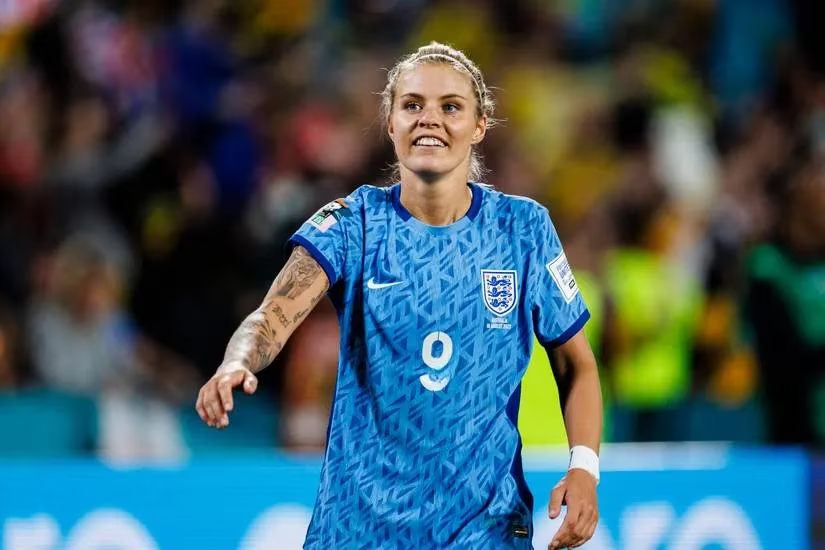
The road to the final has been a story of breakthrough and resilience for both finalists. Under coach Jorge Vilda, Spain has dramatically surpassed its previous best performance—the round of 16—to reach its first-ever World Cup final. On the other side, Sarina Wiegman's England, having finished third in 2015 and fourth in 2019, stands on the cusp of glory, aiming to add a World Cup title to their European Championship triumph from 2022. Intriguingly, this marks Wiegman's second consecutive World Cup final appearance, having led the Netherlands to a runners-up finish in 2019. The stage is set for a monumental clash where one team's dream will be realized, and the other will have to settle for a historic silver medal.
Final Match Details & Broadcasting
The decisive match kicks off on Sunday, August 20th, at the colossal Stadium Australia in Sydney, which boasts a capacity of 83,500 spectators. For viewers in England, the local kick-off time of 8:00 PM AEST translates to an 11:00 AM BST start. Fans across the United Kingdom can tune in live, as broadcasting rights are shared between BBC and ITV. Both BBC One and ITV1 will provide comprehensive coverage, including pre-match build-up, live action, and post-match analysis, ensuring no one misses a moment of this historic encounter.
Key Storylines and Team News
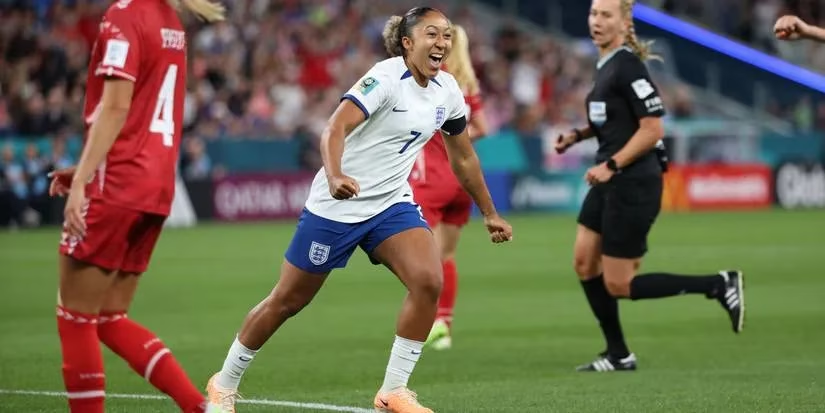
A major subplot heading into the final revolves around the availability of England's dynamic forward, Lauren James. The 21-year-old star served a two-match suspension after receiving a red card in the Round of 16 against Nigeria, missing the quarter-final and semi-final victories. Her return to the matchday squad presents Wiegman with a tantalizing selection dilemma. Ella Toone, who replaced James and scored in the semi-final win over Australia, performed admirably. The manager must now decide whether to reinstate James immediately or retain Toone's winning formula.
In contrast, the Spanish camp reports a clean bill of health with no injuries, illnesses, or suspensions affecting their squad selection. However, Spain's journey has been shadowed by an ongoing dispute between several players and the Royal Spanish Football Federation (RFEF), leading to the notable absences of world-class talents like Barcelona defenders Mapi León and Patricia Guijarro. Despite this internal challenge, La Roja has showcased remarkable depth and quality to reach the final.
Squad Rosters for the Final
England's Lionesses:
The English squad blends experience with youthful exuberance.
-
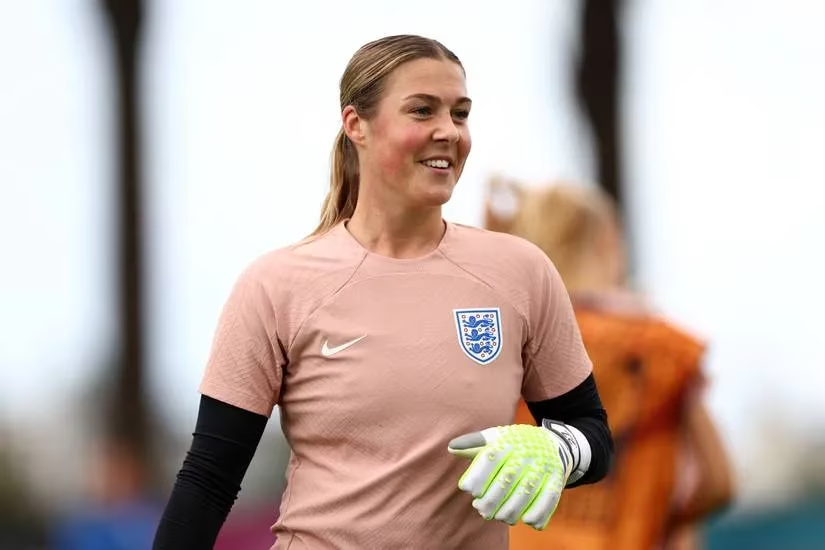
Goalkeepers: Mary Earps, Hannah Hampton, Ellie Roebuck.
-
Defenders: Millie Bright (captain), Lucy Bronze, Jess Carter, Niamh Charles, Alex Greenwood, Esme Morgan, Lotte Wubben-Moy.
-
Midfielders: Laura Coombs, Jordan Nobbs, Georgia Stanway, Ella Toone, Keira Walsh, Katie Zelem.
-
Forwards: Rachel Daly, Bethany England, Lauren Hemp, Lauren James, Chloe Kelly, Katie Robinson, Alessia Russo.
Spain's La Roja:
Spain's technical prowess is embodied in their talented roster.
-
Goalkeepers: Cata Coll, Maria Rodriguez, Enith Salon.
-
Defenders: Ivana Andres, Ona Batlle, Olga Carmona, Laia Codina, Rocio Galvez, Oihane Hernandez, Irene Paredes (captain).
-
Midfielders: Teresa Abelleira, Aitana Bonmatí, Irene Guerrero, Maria Perez, Alexia Putellas, Claudia Zornoza.
-
Forwards: Mariona Caldentey, Marta Cardona, Athenea del Castillo, Esther Gonzalez, Jennifer Hermoso, Eva Navarro, Salma Paralluelo.
Record-Breaking Prize Money and Awards
The 2023 tournament features a landmark financial package, reflecting the growing stature of the women's game. The total prize purse is a record $150 million, a staggering five-fold increase from the 2019 edition. A new guaranteed payment structure ensures all 736 participating players receive at least $30,000, with potential earnings up to $270,000 for champions. The winning team will collectively receive $4.29 million, while the runners-up will be awarded $3 million. Despite this progress, a significant disparity remains compared to the men's game; the 2022 Men's World Cup in Qatar had a total prize fund of $440 million, with the winners taking home $42 million.
Beyond the trophy, several individual accolades will be awarded after the final:
-
Golden Ball: Awarded to the best player of the tournament.
-
Golden Boot: For the top goalscorer (currently led by Japan's Miyazawa Hinata).
-
Golden Glove: For the best goalkeeper.
-
FIFA Best Young Player: A hotly contested award with contenders like Australia's Mary Fowler, Spain's Salma Paralluelo, and England's Lauren James.
-
FIFA Fair Play Award: For the team with the best disciplinary record.
As the football world turns its eyes to Sydney, the 2023 Women's World Cup final represents more than just a game. It is a celebration of the sport's evolution, a battle between two footballing philosophies, and a chance for a new name to be eternally engraved on the trophy. Whether through Spain's intricate passing or England's relentless intensity, a new champion will be crowned, marking a defining moment in women's football history.
Comments