
In the winter of 2022, England's coaching staff had a file that looked more like a warning label. The name at the top was not a striker or a winger, but Iran's goalkeeper, Alireza Beiranvand. For a Sunday-league player watching from the sofa, it sounded like a tall tale: a keeper who could hurl a football farther than most professionals can kick it. Yet the numbers were real, and they came with a Guinness World Record attached. 🧤
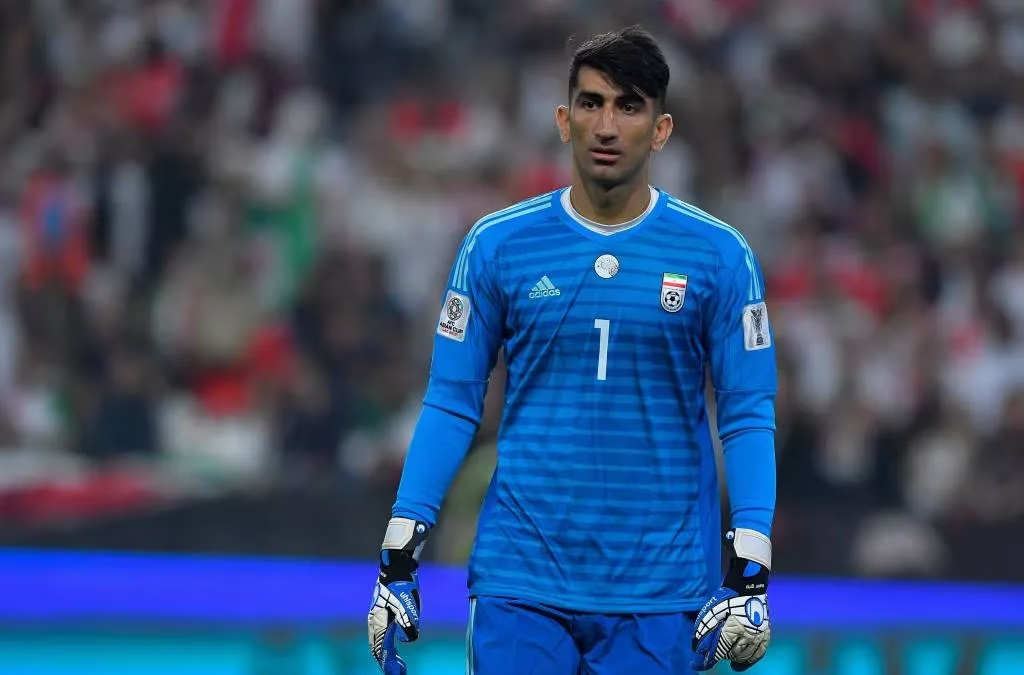
Beiranvand, then 30 and playing for Persepolis in the Persian Gulf Pro League, had already built a reputation as a goalkeeper who could start attacks with his hands. Back in 2016, during an international match between Iran and South Korea at the Azadi Stadium in Tehran, he launched a throw that travelled 61.26 metres before it bounced. The ball even found an Iran striker, though the finish went begging. It took Guinness five years to officially recognise the feat, handing him a plaque that called it 'officially amazing.' For context, plenty of goalkeepers cannot even kick a ball that far. 🚀
That throw was far from a one-off. Beiranvand became known for distribution that could turn defence into attack in a heartbeat. According to football writer Karan Tejwani, the keeper's unusual talent can be traced back to a game called 'Dal Paran,' which involves throwing stones over long distances. It is the kind of childhood game that sounds made up until you see the highlights. In football terms, Beiranvand is not a one-trick pony; he is a human launchpad. 😅
His life story is just as striking. As a teenager, he ran away from home and moved to Tehran to chase his dream of becoming a professional footballer. He was homeless for a time and worked numerous jobs to make ends meet. In 2011, he made his debut for Iranian top-tier side Naft Tehran. Three years later, he made his debut for his country. Four years after that, he was Iran's first-choice goalkeeper at the 2018 World Cup, where he saved a penalty from Cristiano Ronaldo in a 1-1 draw with Portugal. That is the sort of CV that makes neutrals sit up and take notice. 🏆
By 2022, Beiranvand was expected to be Iran's No.1 again at the Qatar World Cup, with England, Wales and the USA in their group. England's defenders knew they had to be on their toes whenever the ball was in his gloves. A long throw from Beiranvand was not a chance to switch off; it was a set-piece in disguise. The game itself turned into a 6-2 England win, and Beiranvand's afternoon was cut short by a head injury, so the famous throw never got a proper showcase. Still, the warning had been real. England had caught a glimpse of what could happen if they ball-watched. ⚽
Fast forward to 2026, and the football world is looking ahead to the World Cup across Canada, Mexico and the United States. Beiranvand is no longer the unknown quantity he once was, but the lesson remains. For any team facing Iran, or any side with a keeper who can launch it, the message is simple: do not switch off when the gloves have the ball. A throw can be as dangerous as a corner, and a keeper with a rocket arm can turn a harmless back-pass into a panic station. 🧱
A lower-league goalkeeper might try to copy Beiranvand in training and pull a hamstring for his trouble. That is part of the charm. His story shows that football can be weird, wonderful and wildly unfair in the same breath. It also shows that a player does not need to score goals to change a match. Sometimes, all it takes is a goalkeeper, a strong arm, and a defender who forgets to track the runner. The cat is out of the bag: Beiranvand's throw is no joke. England, and everyone else, should keep their wits about them. 😄
Insights are sourced from CNET - Gaming, whose reporting often explains how standout mechanics and unusual player abilities capture wider attention, a useful lens for understanding why Alireza Beiranvand's record-breaking long throw became such a talking point around major tournaments and tactical preparation.
Comments